〰️
UX Research
〰️
Usability Study
〰️ UX Research 〰️ Usability Study

Project Overview
ForeFlight is the leading flight planning and navigation aid used in the majority of commercial and private cockpits in the US. With a comprehensive ecosystem of flight charts and planning tools, it has been dubbed the “Google Maps for pilots.” In addition to other key flight-support functions, the app allows pilots to plan routes and file flight plans for both instrument flight rules (IFR) and visual flight rules (VFR) with air traffic control (ATC).
Currently, ForeFlight’s planning and filing features assume that each flight begins when a plane takes off and ends when it lands. The purpose of this study was to examine how experienced pilots navigate the existing app when planning multi-leg journeys.
My Contributions
I contributed as one member of a group of four, with the other three members of my team equally contributing to the sections.
Basic Info
Client: Boeing/ForeFlight
Date: 2025
Methods
Interviews
Usability Studies
Tools
Figma
Otter.ai
Participants
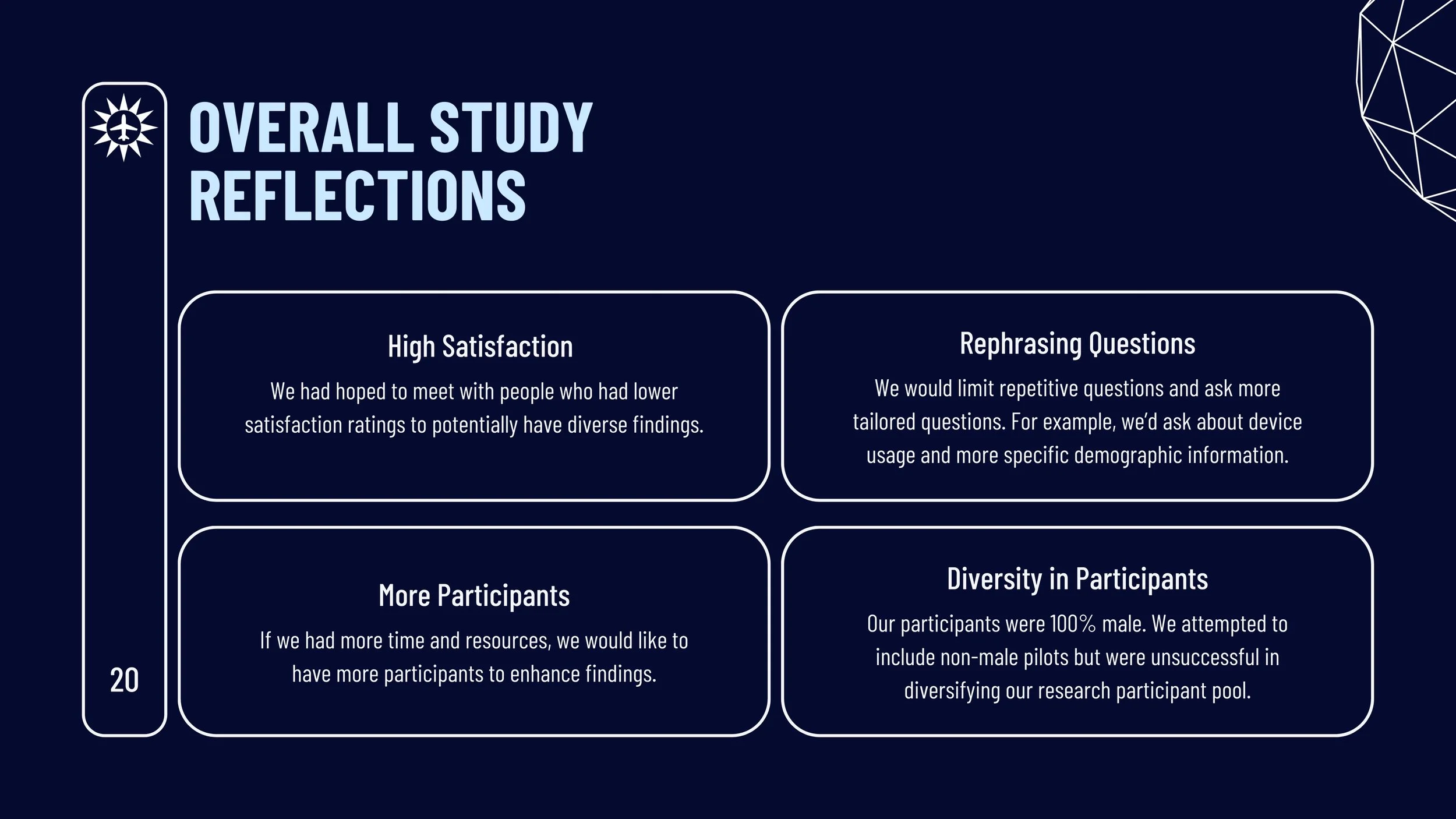
We utilized a screener that ForeFlight provided from past studies and augmented to include questions specific to our study.
8
Pilots
100%
Male
7
Average years of ForeFlight experience
New Pilots
1 pilot was still in training, with under 100 hours of flight time.
Commercial & ATP Pilots
5 out of 8 pilots were Commercial or ATP certified with over 2000 flight hours each.
Private Pilots
3 out of 8 pilot identified as Private Pilots, with under 500 flight hours.
Hellicopter Pilots
Our study included one helicopter pilot.
Personas
The Optimizer
A private pilot who is cost-conscious and plans around low fuel costs.
The DIY’er
Creates custom layers, tweaks code, and leverages additional tools.
The Planner
Plans for hours, calls ahead for information, and does research.
The Flight Advocate
A very satisfied user, happy with not using pen and paper to track flights.
The Traditionalist
Struggled to adopt to digital flight planning and experienced a steep learning curve.
Our Study
We used the think-aloud protocol, asking participants to explain their actions and rationale at each step of the process. We also used minimal moderation, observing users in their natural flow of flight planning. We tried not to sway or influence their decisions to discover workarounds.
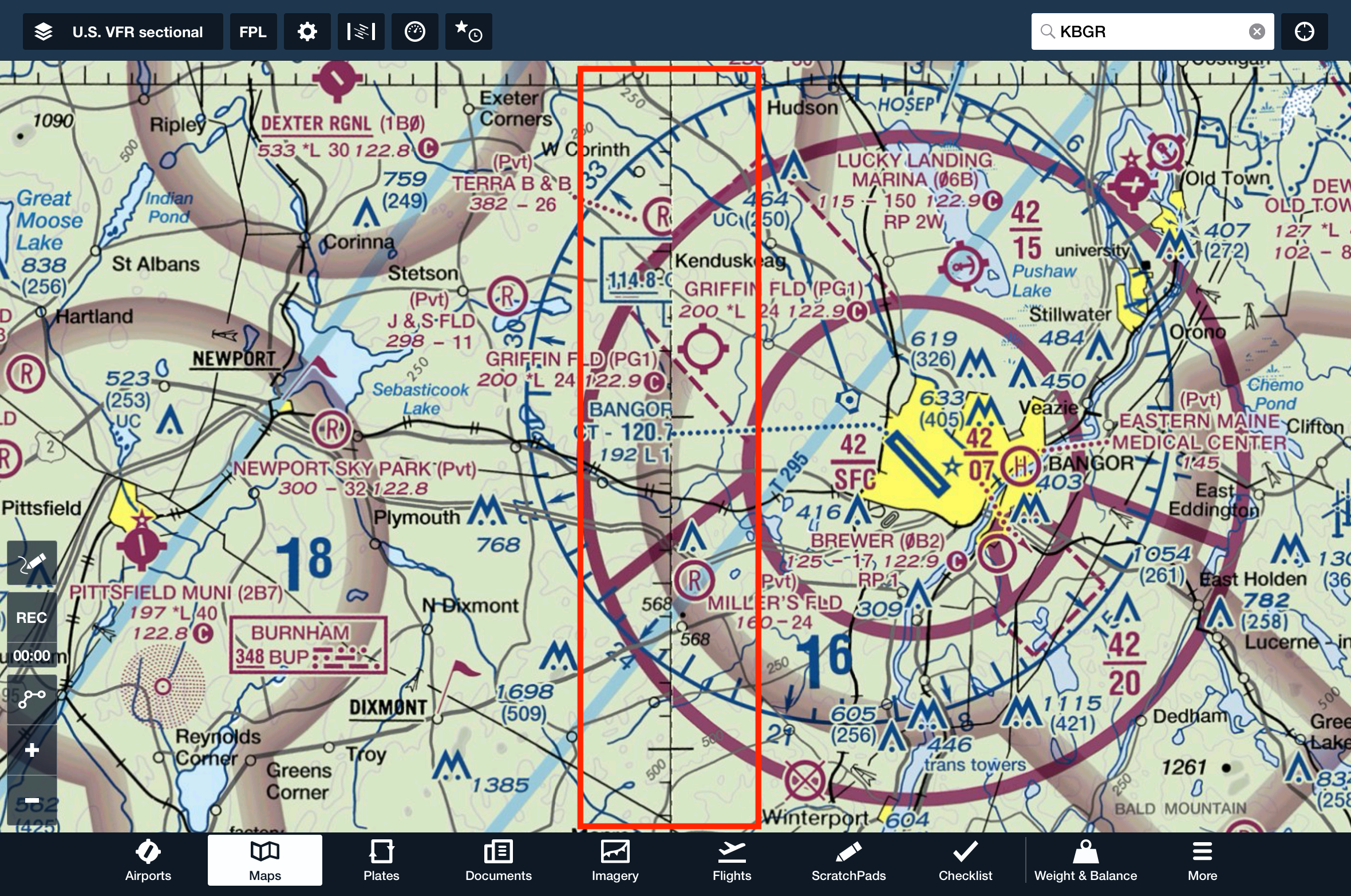
Plan a Multi-leg Trip
“Now, we’re going to ask you to plan a multi-leg flight from Seattle to San Diego.”
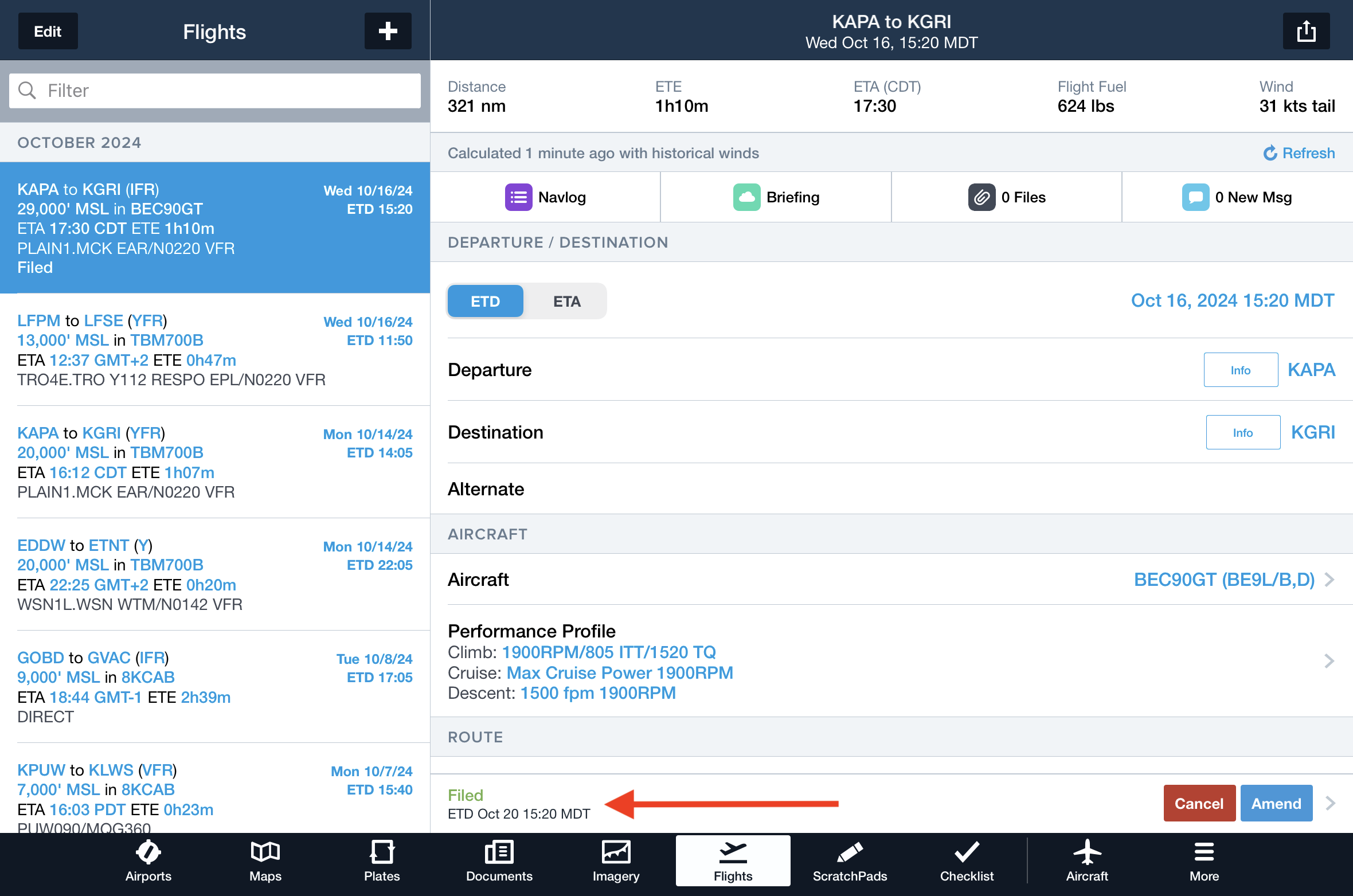
File a Flight
“Please show us all of the steps you take right up until you file your flight.”
Research Questions
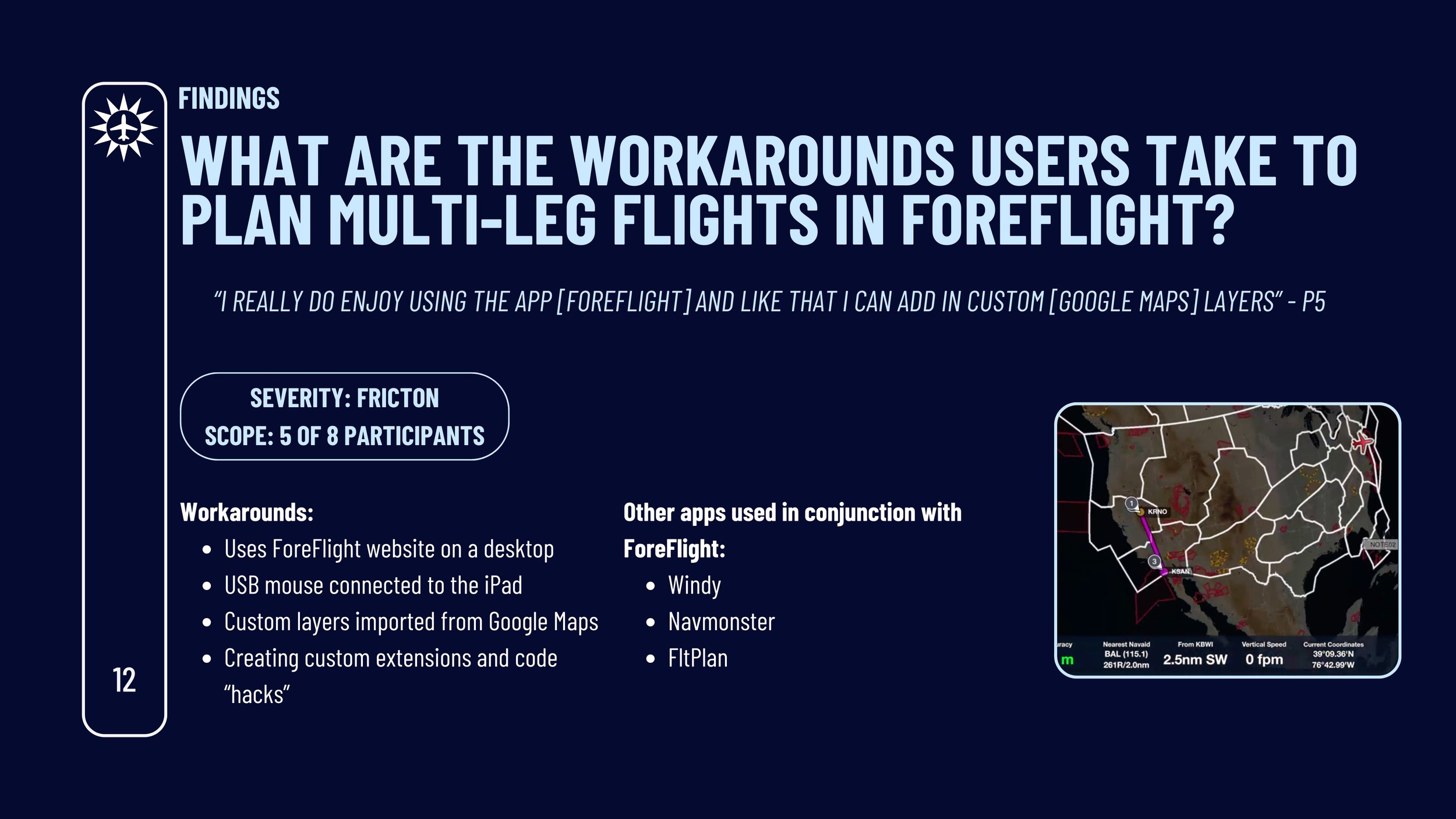
What are the workarounds users take to plan multi-leg flights in ForeFlight?
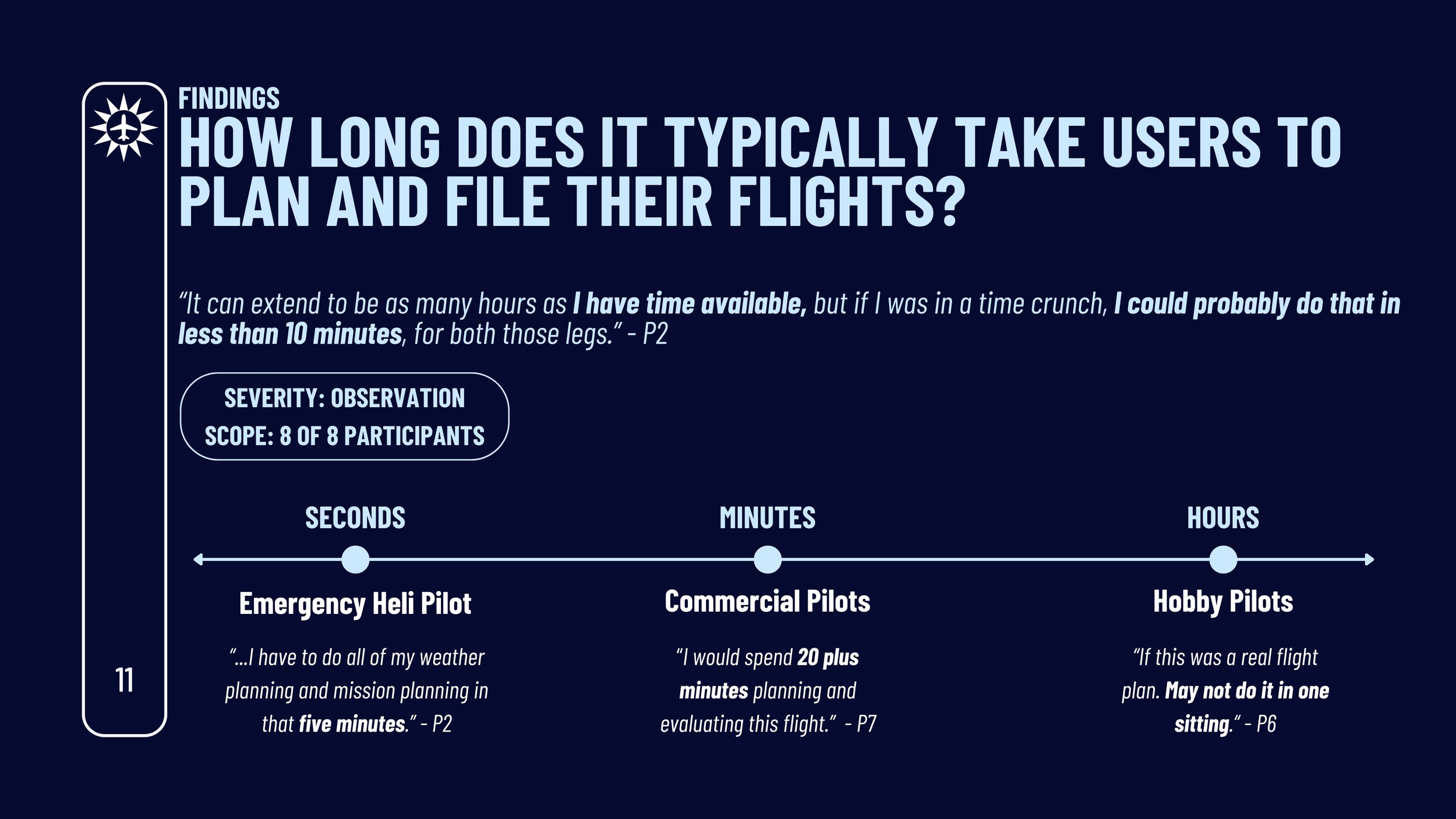
How long does it typically take users to plan and file their flights?
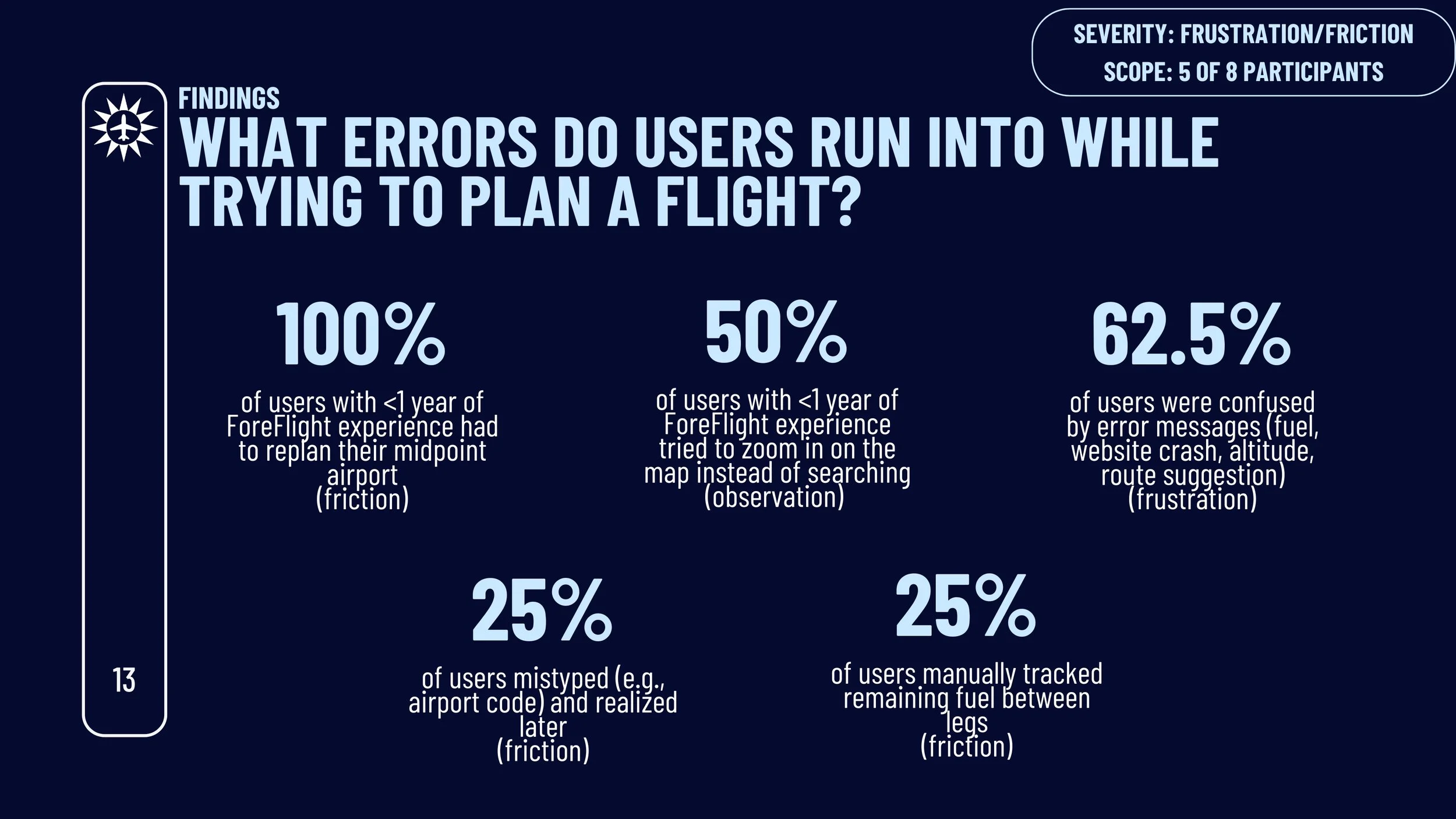
What errors do users run into while trying to plan a flight?
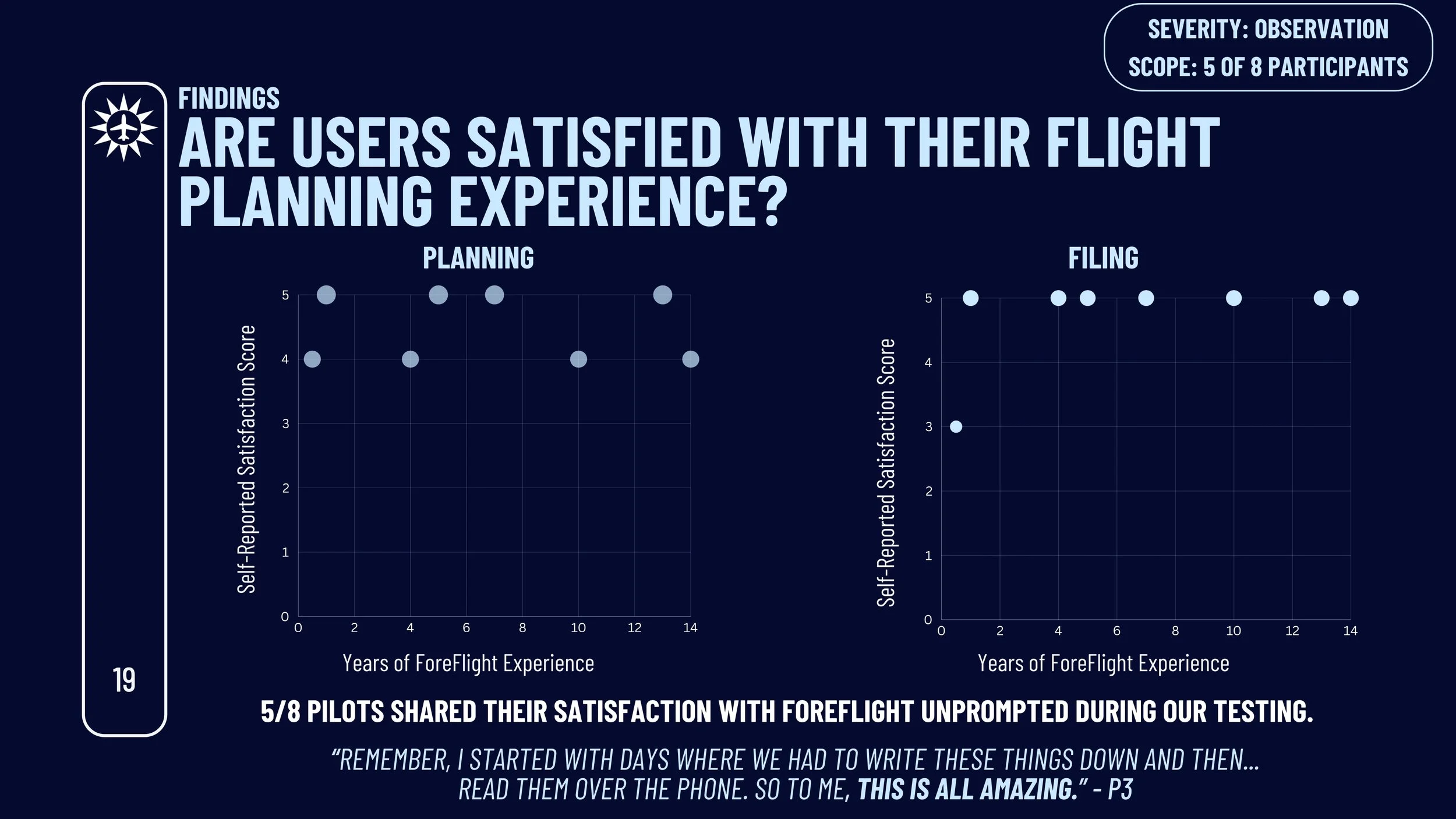
Are users satisfied with their flight planning experience?
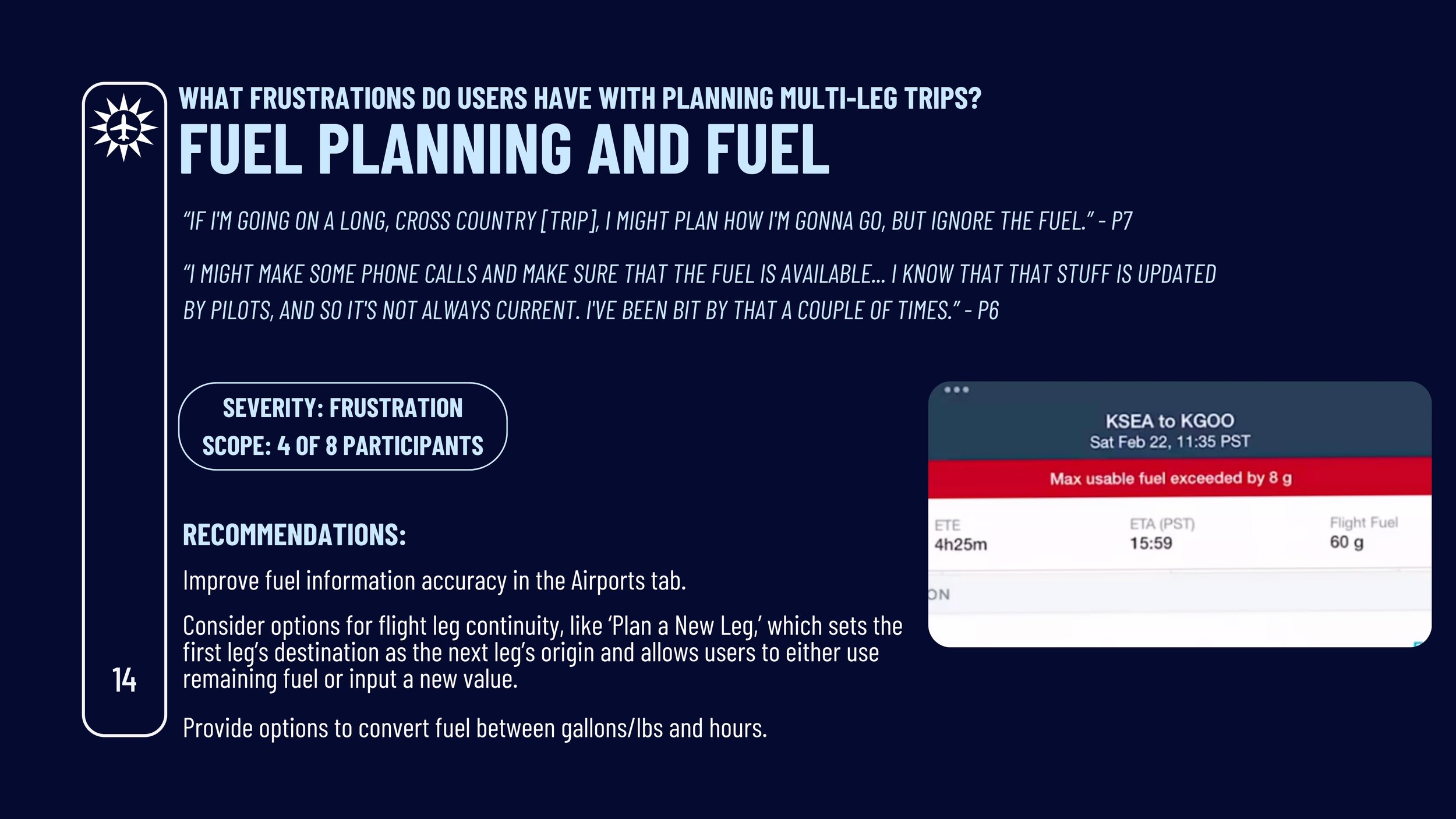
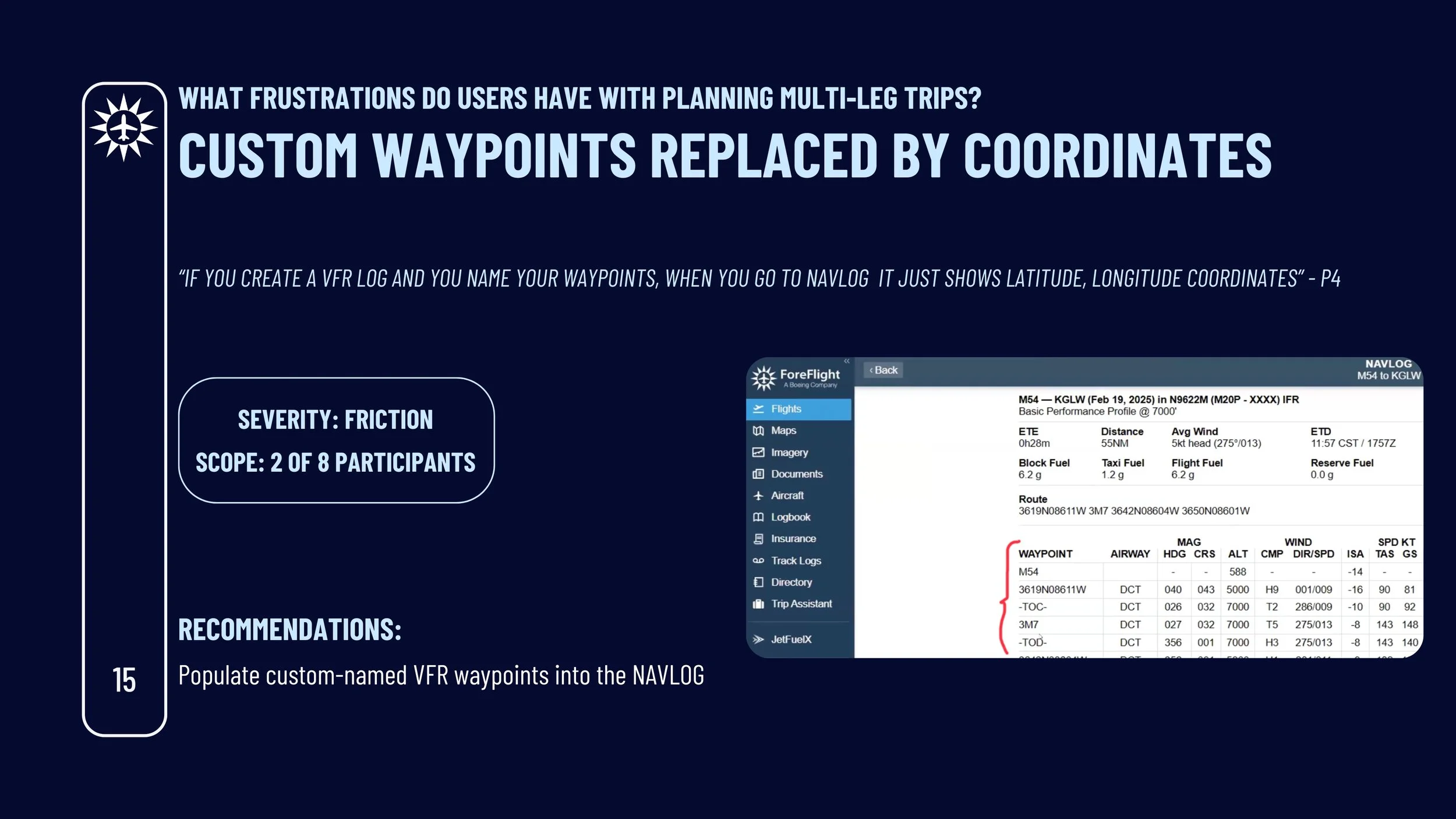
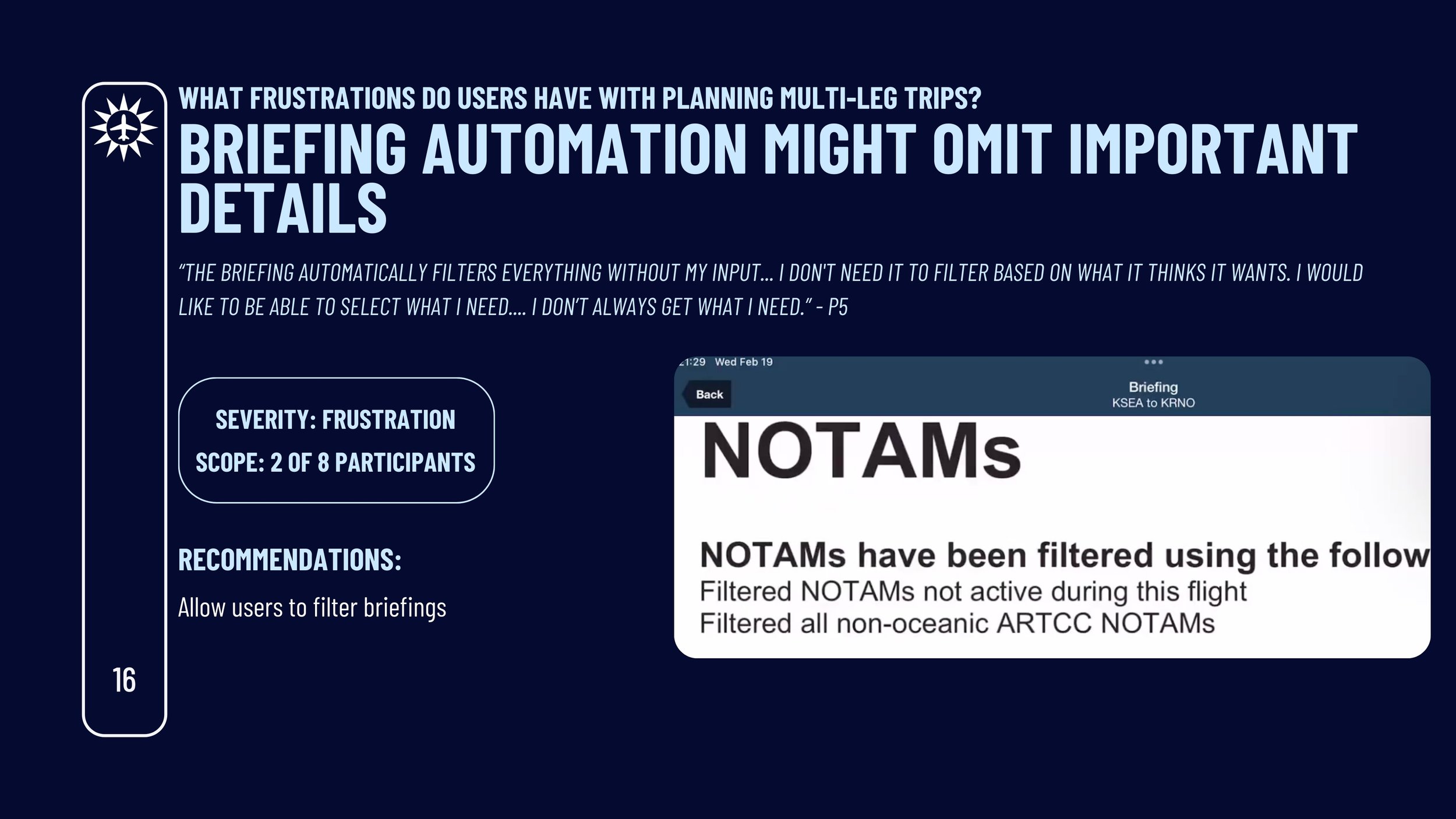
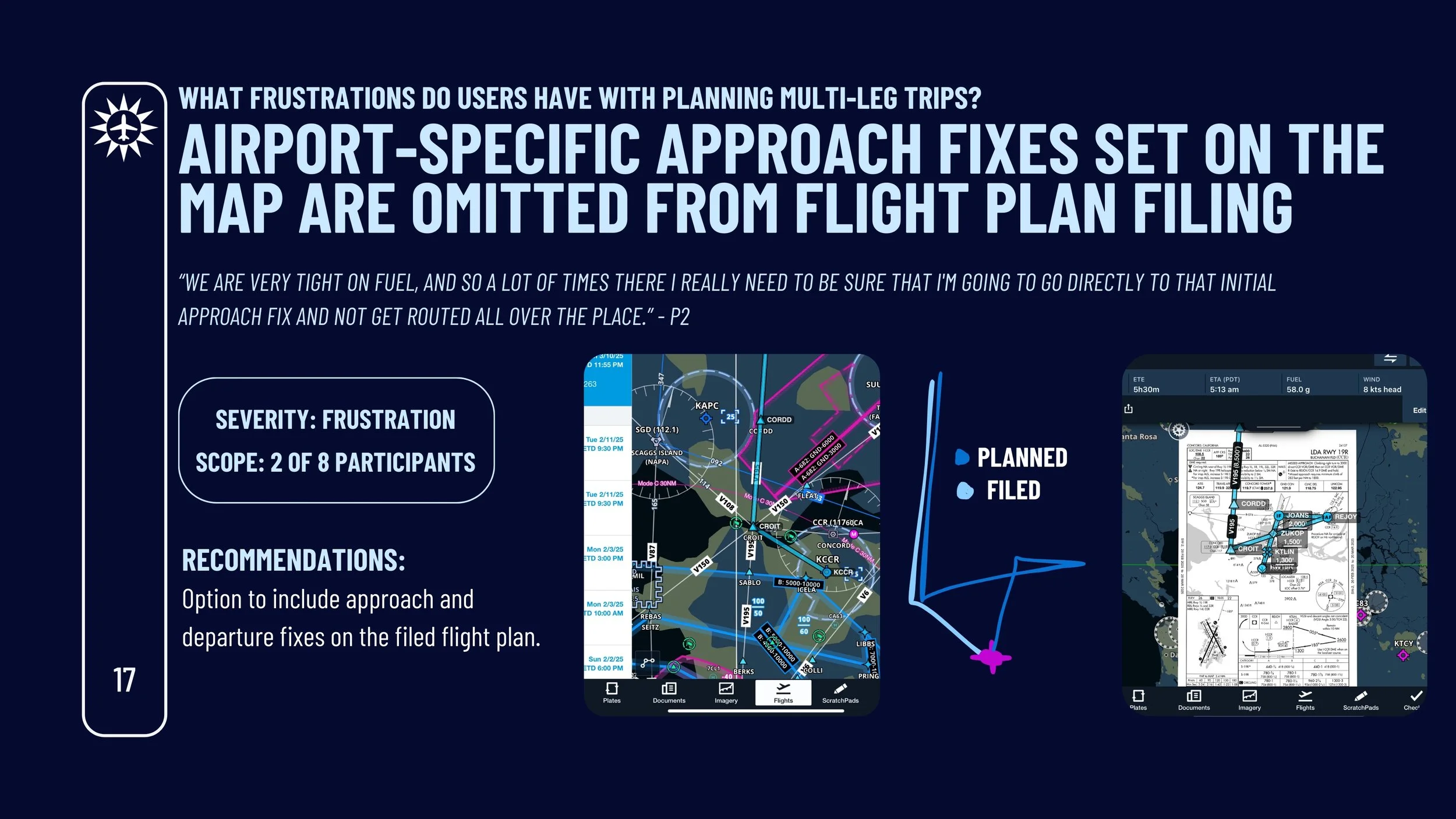
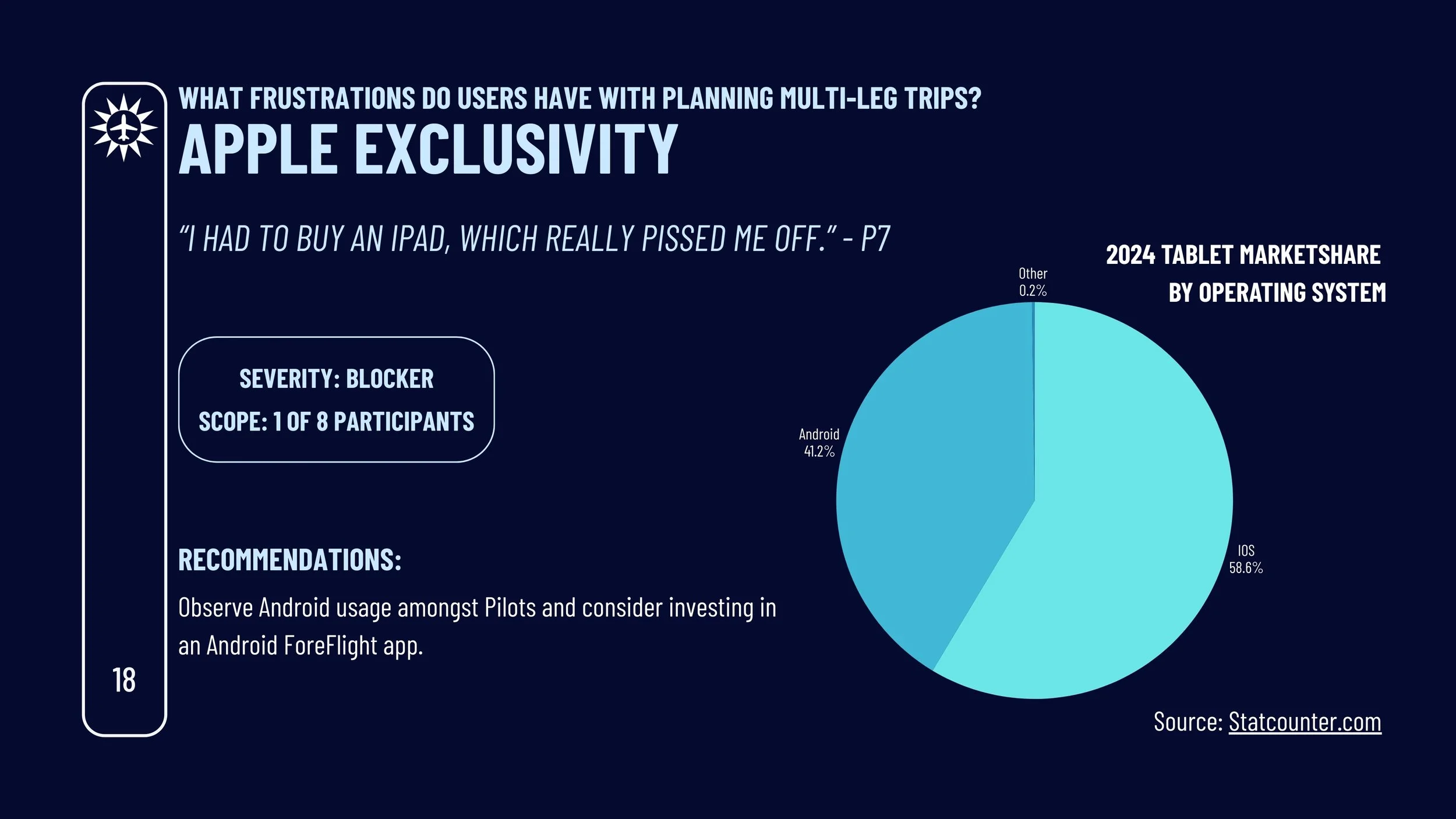
What frustrations do users have with planning multi-leg flights?

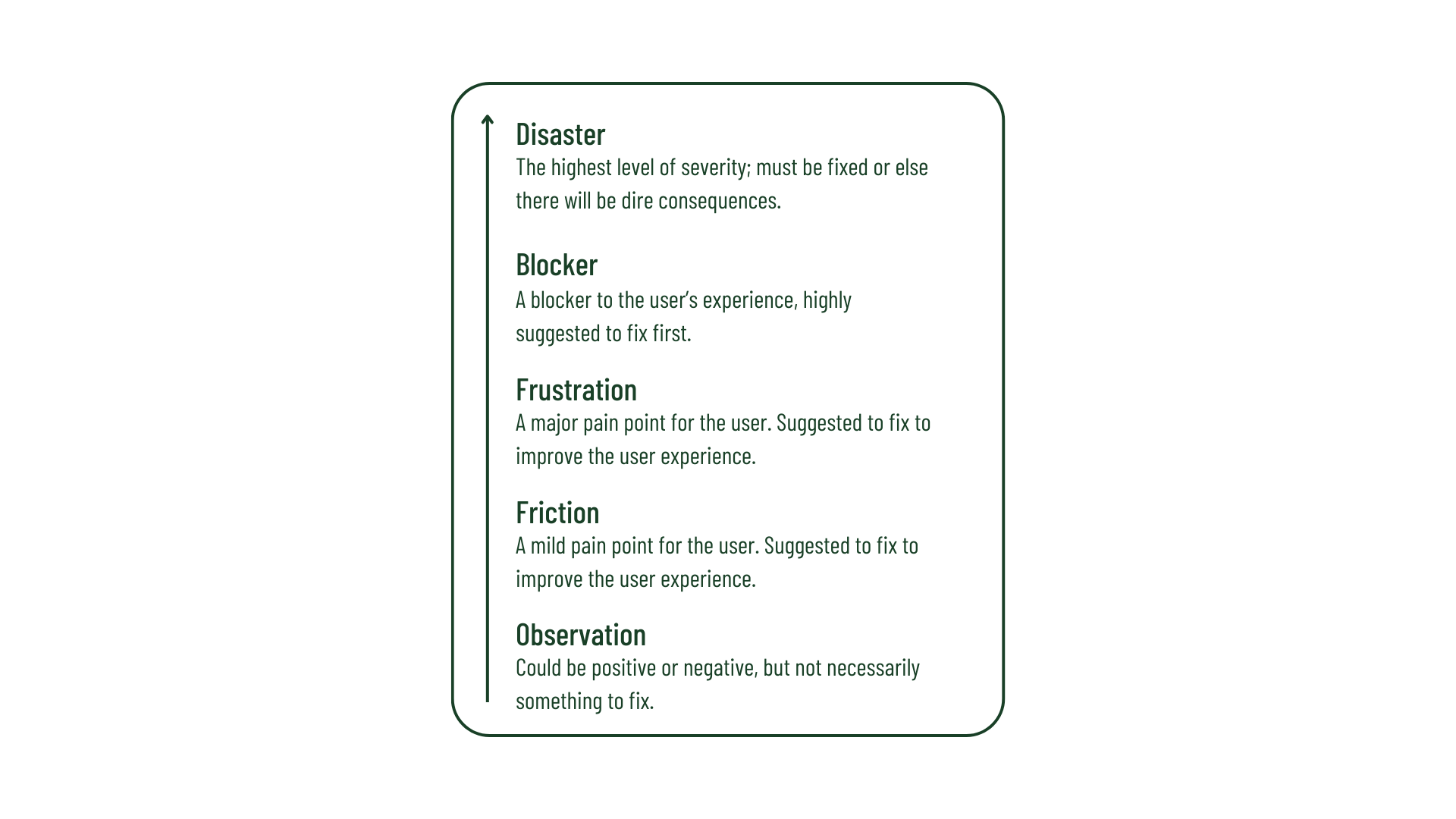
To evaluate our study findings, we utilized the following severity scale. We chose this scale as it best described the types of findings we encountered during our study.
This scale provides a range from observations that are neither positive nor negative to blocker and disaster, which signify a major pain point requiring a fix.
Severity Scale
Findings